 ISO Certified Company
+91-9233973156
ISO Certified Company
+91-9233973156
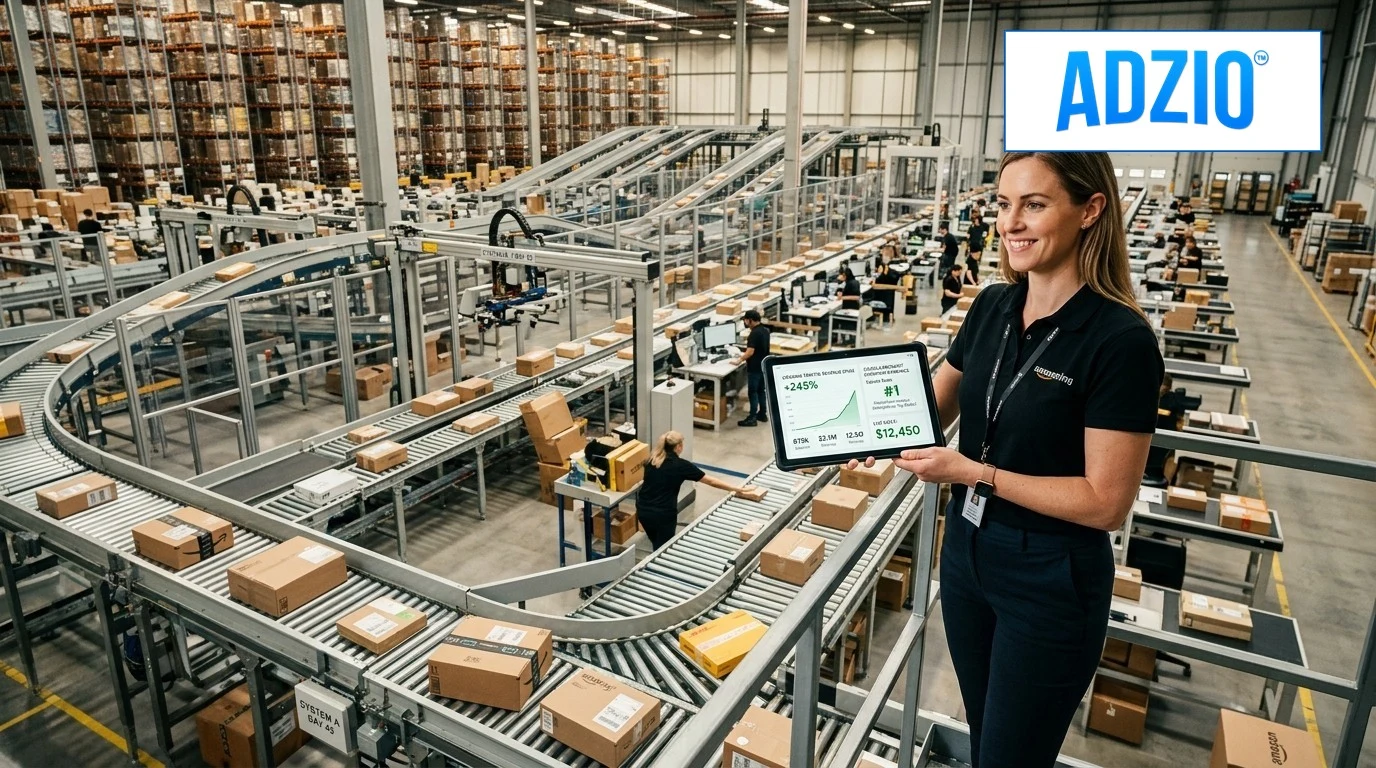
Amazon Marketing combines product discoverability, listing quality, algorithmic Amazon SEO, precision advertising, brand presentation, customer trust, and performance optimization to help businesses build a commanding presence within Amazon's commercial ecosystem. AdZio approaches Amazon Marketing as a complete channel strategy rather than treating advertising as the only growth activity—unifying organic catalog architecture, high-converting product content, Brand Store experiences, and margin-disciplined retail media management.

Amazon functions as the primary digital retail destination for hundreds of millions of high-intent consumers. Unlike general search engines where users search across informational, navigational, and commercial queries, shoppers arriving at Amazon have entered an active buying mindset. Amazon Marketing represents the strategic practice of positioning products directly along these commercial search pathways, ensuring that when potential buyers seek solutions within your category, your brand is prominently discoverable, compellingly presented, and ready to convert.
For consumer product manufacturers, emerging D2C brands, and established enterprise retailers, Amazon is rarely an optional outlet—it is a critical commercial channel that establishes market authority and sales velocity. However, winning on Amazon requires a profound departure from traditional digital marketing. Inside Amazon, customer discovery is governed by internal algorithmic ranking engines that balance search term relevance, historic sales velocity, price competitiveness, customer fulfillment speed, and conversion rates. Simply listing an item does not create commercial success; structured optimization is required to make products systematically findable.
Crucially, organic discoverability and paid advertising on Amazon exist in a continuous, symbiotic flywheel. High-performing Sponsored Product ads generate initial click-throughs and purchasing momentum. This increased sales velocity sends positive ranking signals to Amazon's organic indexing algorithms, elevating non-paid search positions for primary category keywords. Conversely, listings with comprehensive bullet features, high-contrast imagery, and compelling review ratings maximize paid traffic conversion, dramatically lowering your Cost per Acquisition (CPA) and Advertising Cost of Sales (ACoS).
This interconnected reality is why Amazon Marketing demands a holistic operational discipline. Treating advertising in isolation without fixing listing attributes, ignoring review sentiment, or neglecting inventory availability inevitably burns capital. At AdZio, we engineer complete Amazon growth engines that balance catalog data integrity, customer psychological reassurance, and surgical campaign execution to capture sustainable, profitable market share.
Amazon Marketing is the dedicated commercial discipline of planning, executing, and scaling brand and product presence on Amazon through catalog data architecture, algorithmic Amazon SEO, high-impact product imagery, A+ Content, Brand Store design, Sponsored Advertising (PPC), promotional strategy, and review governance.
Structuring flawless parent-child variation trees, standardized universal product identifiers (UPC/EAN/ASIN), and precise category attribute nodes that prevent listing suppression and support search filtration.
Engineered search term positioning across titles, feature bullets, backend generic keywords, and subject matter fields to align with high-intent customer search syntax without keyword stuffing.
Immersive digital merchandising through visual comparison tables, rich editorial storytelling modules, and multi-page brand destinations that communicate premium value and lift conversion.
Multi-tiered advertising across Sponsored Products, Sponsored Brands, and Sponsored Display to defend branded search space, capture competitor market share, and drive sales velocity.
Fostering authentic customer feedback loops and prompt post-purchase engagement compliant with Amazon customer communication policies to protect seller feedback ratings.
Rigorous tracking of ACoS, TACoS, FBA fulfillment costs, return rates, and contribution margins to ensure every rupee spent in advertising yields net profitable commercial growth.
Amazon Marketing operates through a synchronized, continuous lifecycle that connects strategic catalog preparation with algorithmic discoverability, customer persuasion, and margin-governed optimization.
Establish category economics, pricing structure, competitive benchmarks, and inventory fulfillment models (FBA/FBM).
Audit ASIN variation architectures, brand registry protection, category mappings, and listing health diagnostics.
Rewrite technical titles, benefit-oriented bullet points, and specification tables for maximum human clarity.
Integrate high-intent root terms, long-tail phrases, and backend generic search fields into algorithmic indexing nodes.
Expand search visibility across top-of-search results, department browse trees, and category filtration attributes.
Overcome friction through infographic image carousels, dimension scales, lifestyle context, and comparative charts.
Deploy Sponsored Products, Brands, and targeted coupon badges to win top-of-search placements and boost velocity.
Secure the Buy Box, emphasize Prime fast-delivery guarantees, and clear pricing clarity to complete the checkout.
Harness policy-compliant follow-ups and product packaging inserts to generate authentic, high-rating customer reviews.
Analyze search term reports, isolate bleed keywords, reallocate budgets, and iterate product content for sustained ROI.
Unlike standard web marketing where organic search, paid search, and product merchandising operate in separate organizational silos, Amazon's marketplace binds them into an automated feedback loop. When a new product listing is launched with well-researched keywords and optimized visuals, organic search impressions begin to register. However, without historical sales velocity, Amazon's A9 search engine hesitates to rank the item on page one for competitive terms.
This is where retail media execution enters. By deploying precision Sponsored Products campaigns targeting exact-match customer search queries, AdZio feeds qualified shoppers into the optimized listing. As these shoppers convert at a higher rate due to professional A+ content and clear infographic imagery, the ASIN records consistent daily orders. Amazon's indexing algorithms interpret this converting velocity as proof of customer satisfaction, automatically pulling the listing up the organic search ranks.
Once top organic ranking is attained, the role of Amazon marketing evolves from aggressive discovery acceleration to strategic market share defense and margin expansion. As organic sales volume grows, your Total Advertising Cost of Sales (TACoS) drops, allowing you to harvest high-margin revenue while maintaining defensive Sponsored Brand and Sponsored Product campaigns on your own branded search terms.
Simultaneously, regular performance analysis identifies search term shifts, emerging competitors bidding on your ASINs, and changes in category consumer behavior. By continually refining bids, updating backend keyword fields, and introducing promotional coupons during seasonal peaks, businesses maintain compounding retail dominance month after month.
An effective Amazon Marketing strategy must be firmly grounded in your business model, product economics, and competitive environment rather than generic tactical checklists. Every product category on Amazon—from fast-moving consumer goods to high-value industrial equipment—exhibits distinct consumer search behavior, margin tolerance, and competitor concentration. Without a tailored strategy, brands risk over-investing in low-margin products or deploying ad spend on keywords that cannot convert profitably.
At AdZio, our strategic planning framework evaluates twelve fundamental pillars:
Sustainable Amazon growth cannot be achieved through artificial hacks, keyword stuffing, or review clubs. Amazon's monitoring systems actively penalize non-compliant seller behavior. A true Amazon marketing strategy relies on superior product presentation, data-backed keyword relevance, controlled advertising bids, and exemplary order fulfillment. At AdZio, we build resilient, policy-compliant frameworks designed for long-term brand equity and predictable cash flow.

A product listing on Amazon is your retail shelf, salesperson, and checkout counter all at once. If a customer clicks on your listing but encounters confusing specifications, poorly lit photos, or an ambiguous product title, they will return to search results and purchase a competitor's product within seconds. Optimization is the meticulous craft of eliminating customer doubt while fulfilling Amazon's indexing guidelines.
Our listing optimization process addresses every vital component:
Balancing core product identity, primary high-volume search phrases, material, pack count, and dimensions within Amazon's 150–200 character recommendations without clutter.
Crafting five skimmable, all-caps highlighted feature statements that translate technical engineering specifications into tangible consumer benefits and everyday use cases.
Populating 100% of back-end catalog attributes (color, size, weight, power source, compatible devices) so products appear accurately in left-hand navigation faceted filters.
Amazon SEO is fundamentally distinct from Google search engine optimization. Google is an information retrieval engine designed to crawl the open web, evaluating site authority through external backlinks, internal linking, and content length. In contrast, Amazon's search algorithm operates inside a commercial transactional ecosystem. Its sole directive is to rank listings that are most likely to result in a successful purchase and satisfy the shopper.
Amazon evaluates two foundational dimensions: Relevance and Performance. Relevance determines whether your listing matches what the customer typed into the search box. This is governed by keyword presence in the product title, bullet points, backend search terms, brand field, and structured attributes. Performance determines whether shoppers actually buy your product when they view it. This is driven by your click-through rate (CTR), conversion rate (unit session percentage), price competitiveness, Prime fulfillment speed, and inventory availability.
Importantly, AdZio does not claim secret proprietary knowledge of Amazon's algorithm, nor do we promise artificial ranking guarantees. Amazon updates its indexing systems regularly (incorporating contextual neural search frameworks like COSMO and Rufus AI shopping assistants). We build ranking strength through transparent, sustainable best practices: comprehensive listing completeness, genuine keyword alignment, rapid order processing, and healthy customer satisfaction signals.
When relevance and performance operate in harmony, your ASIN gains compounding organic authority. You earn organic placements on high-volume category terms, reducing your reliance on expensive pay-per-click bids and elevating your overall profit margins.
Successful Amazon marketing hinges on uncovering exactly how real shoppers search for products within your category, categorizing search intent, and methodically deploying terms without keyword stuffing.
Broad, high-volume generic keywords that define the core product class (e.g., "wireless earbuds", "stainless steel water bottle"). These represent maximum search reach and high category competition, requiring disciplined title and ad placement.
Refined queries highlighting specific materials, dimensions, or technical attributes (e.g., "active noise cancelling earbuds with mic", "insulated leakproof gym bottle 1 litre"). These drive high conversion rates among research-ready buyers.
Niche, multi-word phrases addressing specific use cases, target demographics, or gifting occasions (e.g., "bluetooth earphones for running sweatproof", "copper water bottle for office desk"). These capture high-converting shoppers at lower CPCs.
Amazon provides a dedicated 249-byte "Generic Keywords" backend field that is indexed by search algorithms but hidden from shoppers. AdZio utilizes this space to capture valuable synonyms, colloquial phrases, regional dialect terms, common misspellings, and alternative use cases without cluttering customer-facing titles or bullets. We ensure exact compliance with Amazon byte limits and punctuation rules to avoid field rejection.
Online shoppers cannot touch, hold, or physically test products on Amazon. Product content must bridge this tactile gap by answering every potential question before a customer feels hesitation. Clear, comprehensive content prevents cognitive friction, elevates brand credibility, and directly reduces costly return rates caused by misaligned customer expectations.
Our product content strategy encompasses:
High return rates are among the most destructive margin drains on Amazon, incurring reverse logistics fees and triggering listing performance warnings. By eliminating ambiguity in product specifications, sizing charts, and functionality claims, AdZio ensures that customer expectations perfectly match delivered reality.
Available to sellers and vendors registered under the Amazon Brand Registry, A+ Content (formerly Enhanced Brand Content) transforms basic text descriptions into immersive, high-definition visual brand storefronts directly on the product detail page.
Cross-selling product lines by displaying feature matrices, capacity variations, and premium upgrades, keeping shoppers within your brand family rather than browsing competitors.
Full-bleed header banners, split text-and-image blocks, and technical highlight callouts that convey manufacturing craft, premium materials, and brand heritage.
Optimized modular hierarchy formatted specifically for mobile app viewing, where A+ Content appears prominently above customer reviews, capturing shopper attention during scroll.
Note: While Amazon A+ Content does not directly index text into organic search rankings, it significantly improves conversion rates (unit session percentage). By converting a higher percentage of visitors into paying customers, A+ Content indirectly accelerates organic search velocity and lowers paid ad ACoS.
An Amazon Brand Store is a multi-page, dedicated website experience built inside Amazon's ecosystem. Accessible via your brand's byline on detail pages or custom Amazon URLs, a Brand Store provides an ad-free environment completely insulated from competitor sponsored placements.
AdZio architectures high-converting Brand Stores that function as central marketing destinations:

Amazon Advertising has grown into one of the world's most powerful retail media platforms. Because ads appear precisely where consumers are making purchasing decisions, sponsored media offers immediate visibility and measurable commercial impact. However, scaling ad spend without a structured targeting architecture leads to budget exhaustion on irrelevant search terms.
AdZio manages Amazon advertising across three native self-service formats:
Individual product ads appearing in search results and on product detail pages. We deploy segmented campaigns separating Auto-targeting, Broad, Phrase, Exact keywords, and Product/ASIN targeting.
Premium headline banner placements displaying your custom logo, headline, and multiple ASINs at the very top of search results, as well as auto-playing Sponsored Brands Video ads that stop scrollers in their tracks.
Contextual product and audience retargeting ads placed directly beneath the Buy Box on competitor detail pages, re-engaging shoppers who viewed your products but did not complete checkout.
It is crucial to understand the strategic distinction between Amazon Marketing and Amazon PPC:
Relying exclusively on PPC while neglecting listing quality is equivalent to driving traffic to a closed store. Conversely, relying solely on organic discovery in high-competition categories limits growth. AdZio unifies both disciplines into a cohesive, data-guided engine.
Our team manages campaigns with strict mathematical discipline, avoiding automated set-and-forget traps:
Strategic promotions and discount offers provide vital visual callouts in Amazon search results, catching shopper eyes and providing an immediate competitive edge during high-consideration browsing.
Bright green coupon badges displayed directly beside the product price in search results. These lift click-through rates significantly while offering controlled percentage or rupee-off discounts.
Time-limited promotional events featured prominently on Amazon's high-traffic "Today's Deals" page, ideal for liquidating seasonal inventory or creating concentrated sales spikes to boost organic rankings.
Targeted discount incentives delivered specifically to custom audience segments, such as repeat brand customers, high-spend shoppers, or cart abandoners, fostering long-term customer retention.
Customer reviews and star ratings represent the ultimate trust currency on Amazon. Modern digital shoppers rely heavily on peer experiences before committing their money. A listing with a 4.5-star rating across hundreds of verified reviews will convert at multiples of an unreviewed product, even when competing against lower price points.
Furthermore, review velocity and sentiment feed directly into Amazon's search algorithms. Products that consistently receive negative reviews experience declining conversion rates, which inevitably depresses organic keyword rankings and increases paid advertising costs.
AdZio assists brands in establishing proactive, policy-compliant review generation systems:
Amazon enforces uncompromising anti-manipulation policies regarding customer reviews. Soliciting incentivized reviews, purchasing fake testimonials, participating in review-exchange clubs, or attempting to suppress negative feedback results in swift ASIN suppression or permanent seller account suspension. AdZio strictly adheres to Amazon's Customer Review Policies and never participates in, recommends, or enables review manipulation. Trust is earned through superior product quality and authentic customer service.
Catalog health is the operational backbone of an Amazon business. Catalog discrepancies, incorrect browse node assignments, or broken variation relationships sabotage organic discoverability and waste paid traffic.
Consolidating multiple sizes, colors, flavors, or pack quantities under unified parent ASINs. This aggregates all customer reviews and sales rank velocity onto a single high-converting detail page.
Ensuring items are mapped to the most granular, accurate product categories so they appear in category bestseller lists, sub-category gift guides, and filtered search pathways.
Rapidly identifying and resolving listing suppressions caused by missing main images, truncated titles, incorrect standard product identifiers (UPC/GTIN), or pricing errors.
Images are the single most influential driver of click-through rate and product page conversion on Amazon. Shoppers frequently make purchasing choices based entirely on the image stack without ever reading full description text. A professional image hierarchy must be structured like a sequential visual sales pitch.
AdZio structures a standard 7-image high-converting gallery:
Over 70% of Amazon transactions in India occur on mobile devices. On mobile screens, typography in standard product infographics can become illegible if not designed specifically for small displays.
AdZio designs mobile-first infographics featuring bold high-contrast headlines, enlarged graphic icons, and concise copy that remains crisp and effortless to read on 6-inch smartphone screens.
Conversion Rate (Unit Session Percentage) is the metric that governs both paid ad profitability and organic ranking trajectory. A higher conversion rate means you extract more revenue from every visitor while proving product relevance to Amazon's algorithms.
Ensuring Prime fulfillment badges through FBA or Seller Flex guarantees 1–2 day shipping, a non-negotiable requirement for high-intent shoppers.
Maintaining Buy Box ownership 99%+ of the time through disciplined pricing and inventory management to ensure your ads stay active.
Deploying 5%–10% clip-and-save coupons that create psychological urgency and distinct visual contrast against competing listings.
Prominently stating manufacturer warranties and customer support availability to remove purchase hesitations.
Direct-to-consumer (D2C) brands often face a strategic question: should they focus all resources on their own Shopify/WooCommerce website, or embrace Amazon? The most successful modern brands do not view this as an either/or choice—they deploy a coordinated omnichannel growth strategy.
While an owned brand website provides direct customer relationships, first-party data capture, and complete narrative control, Amazon offers an unmatched base of high-intent consumers who will never discover or trust a new standalone site on their first visit. By marketing on Amazon, D2C brands capture top-of-funnel shoppers who insist on Prime delivery and Amazon's buyer protection guarantees.
AdZio helps D2C brands maintain brand coherence across both channels:
When your D2C brand advertises on Instagram, Meta, or Google, a significant percentage of interested prospects immediately open Amazon to check if your product is listed there. If you do not have an active, optimized presence on Amazon, opportunistic competitors will bid on your brand name and steal those hard-earned customers right at the finish line.
For small manufacturers and emerging startups, Amazon provides an unprecedented level playing field. A small regional enterprise can compete directly with legacy conglomerates if its listing quality, keyword alignment, and product ratings are superior.
Startups avoid heavy upfront outlays on warehouse leases or nationwide logistics fleets. By leveraging Fulfillment by Amazon (FBA), small businesses immediately offer nationwide Prime delivery.
Instead of fighting legacy brands on broad, expensive keywords, small businesses can dominate highly targeted long-tail search phrases where conversion rates are higher and CPCs are affordable.
AdZio implements phased inventory scaling, testing demand on 1–3 initial flagship SKUs before committing working capital to broad catalog rollouts.
The Indian ecommerce landscape is experiencing rapid, sustained expansion. Millions of shoppers across Tier 1 metros (Delhi NCR, Mumbai, Bengaluru, Hyderabad) and fast-growing Tier 2 and Tier 3 cities (such as Jaipur, Surat, Lucknow, Indore, and Coimbatore) now rely on Amazon India (Amazon.in) for their daily consumer needs. For Indian manufacturers, artisans, direct-to-consumer startups, and retail businesses, Amazon India represents an essential gateway to nationwide distribution.
However, marketing to the Indian consumer on Amazon requires acute sensitivity to local buying habits. Indian consumers are discerning value-seekers who evaluate pricing, delivery timelines, festival promotions, and customer reviews rigorously. High cash-on-delivery (COD) return-to-origin (RTO) rates can silently erode margins if catalog descriptions are ambiguous or packaging is fragile.
AdZio tailors Amazon marketing services in India for maximum domestic impact:
Every product category demands a specialized Amazon marketing playbook. Here is how AdZio tailors strategy across key industrial and retail sectors:
Highlighting technical compatibility, chipset performance, battery life, and safety certifications with side-by-side comparison tables and macro component photography.
Implementing precise size charts, fabric weight callouts, model measurement notes, and multi-angle lifestyle photography to minimize clothing returns.
Emphasizing dermatological approvals, ingredient transparency (sulphate/paraben-free), before/after usage guides, and recurring Subscribe & Save subscription drivers.
Focusing on durable materials (food-grade stainless steel, solid wood), room-scale dimension context, ease of cleaning, and simple assembly infographics.
Navigating strict medical claim compliance, displaying AYUSH/FSSAI certifications, nutritional dosage tables, and hygienic tamper-evident packaging visuals.
Showcasing metal purity hallmarks, anti-tarnish guarantees, gift packaging presentations, and high-magnification close-ups of stone settings and clasps.
Optimizing "Amazon Confirmed Fit" vehicle compatibility attributes, installation video modules, weatherproofing ratings, and DIY instructions.
Multi-pack bundle optimization, shelf-life disclosures, Subscribe & Save incentives, and high-frequency Sponsored Products defensive bidding.
Targeting B2B buyers via Amazon Business pricing, GST invoice availability badges, bulk quantity tier discounts, and technical datasheets.
High-growth product businesses do not treat Amazon and their own ecommerce website as adversaries. They operate both in a complementary omnichannel architecture.
| Strategic Dimension | Amazon Marketing Channel | Owned Ecommerce Website |
|---|---|---|
| Primary Advantage | Massive built-in customer footfall, immense buyer trust, and friction-free Prime fulfillment. | Total brand narrative control, direct customer relationship, zero marketplace competition on page. |
| Customer Data & Ownership | Amazon owns the customer relationship; buyer contact info is masked per marketplace policies. | 100% first-party data capture (emails, phone numbers) for lifecycle email and SMS retention marketing. |
| Fee Structure & Margins | Referral fees (typically 8%–15%) plus FBA fulfillment and closing fees per transaction. | Payment gateway fees (approx. 2%) plus self-managed warehousing, courier shipping, and web hosting. |
| Customer Purchase Intent | Exceptionally high; shoppers search actively with credit cards saved, ready to buy. | Varies; requires extensive top-of-funnel paid social and search advertising to generate buying interest. |
| Strategic Role | High-velocity volume, category market share capture, and wide consumer acquisition. | Brand flagship, bespoke customer loyalty programs, exclusive product drops, and high-margin direct sales. |
AdZio provides unified solutions across both domains: explore our dedicated Marketplace Marketing and Ecommerce Website Development services to build an integrated omnichannel sales presence.
It is essential to distinguish between marketing products inside Amazon and promoting products through Google Shopping:
Sophisticated ecommerce brands utilize both channels simultaneously. While Google Shopping captures consumers exploring options across the open internet, Amazon Marketing dominates the final purchasing destination where over half of product searches begin.
Eligible brand owners on Amazon can deploy Amazon Attribution tags to track non-Amazon traffic (such as Google Search ads or social media campaigns) directly to their Amazon product listings or Brand Store.
Furthermore, Amazon's Brand Referral Bonus program rewards brands by refunding an average of 10% of product sales generated through qualifying off-Amazon marketing efforts, lowering advertising acquisition costs.
Understanding the structural relationship between Marketplace Marketing and Amazon Marketing prevents strategic confusion in your digital retail roadmap.
Marketplace Marketing is the overarching multi-channel strategy that governs a brand's footprint across all online multi-vendor retail platforms. It encompasses channel selection, multi-platform inventory allocation, unified catalog data hygiene, and comparative margin management across Amazon, Flipkart, Myntra, Nykaa, Blinkit, and specialized B2B portals.
Amazon Marketing is the dedicated, platform-specific execution of that strategy within Amazon's unique technical architecture. It addresses Amazon's proprietary A9/Cosmo search algorithms, the Amazon Advertising console (Sponsored Products/Brands/Display), Amazon Brand Registry tools, and FBA fulfillment mechanics. Amazon is one crucial marketplace environment within the broader marketplace ecosystem.
AdZio tracks a balanced scorecard of commercial and operational metrics. We reject vanity statistics and focus on real financial indicators that determine enterprise health.
Formula: (Ad Spend / Ad Revenue) × 100. Measures the direct efficiency of sponsored campaigns. Target ACoS is calibrated against each SKU's gross profit margin to ensure immediate advertising profitability.
Formula: (Total Ad Spend / Total Overall Revenue) × 100. The gold standard metric for assessing whether advertising spend is lifting organic sales velocity and building long-term category equity.
Formula: Ad Revenue / Ad Spend. The inverse of ACoS, commonly used by executive marketing leadership to compare Amazon retail media performance against Meta, Google, and display channels.
Formula: (Units Ordered / Total Detail Page Sessions) × 100. Amazon's exact measure of conversion rate, indicating the persuasive strength of your images, pricing, reviews, and bullet copy.
Tracking daily position changes across primary, secondary, and long-tail category keywords to verify that paid ad velocity is translating into free top-of-search discoverability.
Ensuring your offer maintains the Featured Offer (Buy Box) position 98%+ of the time, protecting your listing from unauthorized third-party reseller hijacking.
Amazon advertising is never a static, one-time setup. Consumer search terms change, seasonal demand fluctuates, and competitor bids shift daily. Without structured weekly optimization protocols, ad campaigns suffer from bid creep, keyword bleeding, and declining ROAS.
AdZio executes systematic optimization sprints:
In digital marketing, agencies that promise "guaranteed 10x ROAS" or "100% campaign success" are misleading clients. ROAS is governed by product category competition, inventory health, pricing, and consumer demand elasticity.
At AdZio, we provide mathematical clarity, transparent reporting, and structured bid governance. We focus on continuous incremental improvements that protect profitability and maximize top-line sales.
Amazon produces vast volumes of operational, search, and commercial data. AdZio transforms these disparate metrics into actionable strategic decisions for brand leaders.
Extracting first-party Amazon search frequency ranks, click shares, and conversion shares to understand whether your brand is gaining or losing category search dominance.
Tracking Inventory Performance Index (IPI) scores, sell-through rates, and stranded inventory to prevent stockouts and avoid punitive Amazon aged inventory surcharges.
Synthesizing gross revenues, advertising costs, FBA fees, returns, and seller fees to calculate exact SKU-level contribution margins and net profitability.
AdZio manages Amazon marketing through a structured, multi-stage workflow that guarantees rigorous execution at every touchpoint.
Establish target ACoS, TACoS limits, revenue benchmarks, and priority product lines.
Audit account health, brand registry status, fee structures, and existing listing suppressions.
Organize parent-child variation trees and correct missing structured attribute nodes.
Optimize titles, benefits-driven bullets, and commission mobile-friendly infographics.
Build tiered keyword clusters spanning root terms, feature queries, and backend search fields.
Design custom comparison charts, editorial brand modules, and curated Brand Store subpages.
Structure segmented auto, broad, phrase, exact, and ASIN-targeting sponsored campaigns.
Coordinate clip-and-save coupons, Prime-exclusive discounts, and seasonal deal events.
Harvest positive search terms, add negative keywords, and adjust placement modifiers.
Deliver transparent dashboards reviewing ACoS, TACoS, organic rankings, and net profits.
Amazon maintains some of the most stringent seller compliance standards in global ecommerce. Seller performance notifications, listing deactivations, and account suspensions can happen rapidly if businesses violate marketplace policies. Operating responsibly is not merely an ethical requirement—it is essential risk management that protects your company's revenue stream.
Key compliance areas governed by AdZio include:
AdZio provides strategic ecommerce marketing and consulting services. We do not provide formal legal representation or legal advice. Amazon's program policies, fee schedules, and terms of service evolve continuously; we advise businesses to maintain active alignment with Amazon's official Seller Central and Brand Registry documentation.
Over years of managing retail media, AdZio has observed predictable mistakes that derail brand performance on Amazon. Avoiding these pitfalls is the first step toward commercial sustainability.
Using lifestyle buzzwords or vague storytelling in product titles rather than concrete search terms, dimensions, and specifications that match actual customer search queries.
Spending heavily on PPC when a listing has only 1–2 low-res images, zero reviews, or poor bullet copy. Clicks will bounce, burning ad budget with negligible sales.
Allowing auto or broad ad campaigns to run without regular negative keyword pruning, wasting thousands on irrelevant queries that never generate sales.
Failing to forecast inventory lead times. When an ASIN runs out of stock, its organic ranking collapses, forcing you to rebuild sales velocity from scratch upon restocking.
Engaging in reckless automated repricing battles with competitors, sacrificing unit contribution margins to win the Buy Box without considering net profitability.
Attempting to purchase fake reviews, offering discounts for 5-star ratings, or using non-compliant package inserts, risking permanent account termination.
AdZio approaches Amazon as a sophisticated commercial engineering discipline. We blend data hygiene, algorithmic search optimization, creative persuasion, and surgical ad bidding to build enduring retail value.
We calculate true net margins after referral fees, FBA costs, and packaging to establish realistic, profitable ad spend limits.
We resolve suppressed listings, fix broken variation trees, and populate missing attribute fields for clean indexing.
We direct mobile-first infographics, dimensional charts, and rich A+ brand storytelling that lift shopper conversion.
We integrate high-intent keywords across titles, bullets, and backend generic search fields to capture organic reach.
We deploy Sponsored Products, Brands, and Display with granular match types to capture intent and defend brand equity.
We aggressively eliminate non-converting search terms and calibrate placement bids to protect target ACoS.
We enroll eligible products in Amazon Vine and automate native review requests to steadily accumulate social proof.
We provide transparent, real-world business reporting tracking organic rankings, TACoS, and net operating profit.
Amazon Marketing is a powerful vehicle for businesses with physical products, but suitability depends heavily on product margins, inventory capacity, and brand readiness:
Before committing significant capital to Amazon marketing, brands should evaluate:
Get clear, definitive answers to common strategic, technical, and commercial questions regarding Amazon marketing services with AdZio.
Whether you are launching your first flagship product line, expanding catalog distribution across India, or scaling existing retail media campaigns toward lower TACoS and higher net contribution margins, AdZio provides the strategic engineering, creative firepower, and algorithmic precision your brand needs. Discuss your products, Amazon goals, catalog requirements, advertising needs, and growth objectives with our specialized team today.