 ISO Certified Company
+91-9233973156
ISO Certified Company
+91-9233973156
ISO Certified Company
+91-9233973156
ISO Certified Company
+91-9233973156

Even world-class content fails if search engines cannot efficiently crawl, render, and index your code. AdZio delivers rigorous, engineering-first technical SEO services to eliminate server bottlenecks, resolve Core Web Vitals latency, optimize crawl budget, and establish an unshakeable architectural foundation.
Technical SEO encompasses the server-level, architectural, and code-based optimizations that allow search engine bots—such as Googlebot—to discover, crawl, render, interpret, and index your website without friction.
While content SEO addresses semantic topical relevance, technical SEO ensures that search engine crawlers can physically access that content at scale. Without a clean technical foundation, valuable landing pages remain invisible in Google's primary index.
Modern web applications are increasingly complex. Technical errors directly limit organic search revenue by creating invisible barriers between your pages and prospective buyers.
Accidental noindex tags, robots.txt blocks, or rendering failures cause high-converting landing pages to vanish from search results unnoticed.
Search engines allocate a finite crawl quota per domain. Cleaning broken links, redirect chains, and faceted parameters ensures bots spend time crawling your highest-margin pages.
Websites optimized for Core Web Vitals experience lower bounce rates, higher average session durations, and improved conversion rates across mobile and desktop.
Websites with spotless technical architectures, valid structured data, and clean crawl graphs maintain stable visibility throughout volatile Google Core Updates.
We perform comprehensive domain health inspections using enterprise desktop and cloud crawlers, server access log analyzers, and code validation suites.
We analyze real raw server log files to uncover exactly how Googlebot, Bingbot, and other search engines navigate your domain, identifying crawl frequency patterns and neglected directories.
Isolating 4xx broken client links, 5xx internal server errors, 302 temporary redirects, and multi-hop redirect chains that deplete crawl budget and degrade link equity.
Visualizing the click distance from your homepage to every published URL, ensuring revenue-generating pages are reachable within 1 to 3 clicks.
Detecting parameter-generated duplicate pages, trailing slash discrepancies, protocol inconsistencies (HTTP vs HTTPS), and www/non-www fragmentation.
Auditing real-world Chrome User Experience Report (CrUX) metrics against lab simulations to diagnose real-world mobile speed and layout shifts.
Checking TLS/SSL certificate validity, mixed-content resource calls, HTTP Strict Transport Security (HSTS), and secure canonical implementations.
Structuring clear paths for search engine bots to navigate and prioritize your highest-value content.
A website’s information architecture acts as its structural skeleton. We design cohesive hierarchical silo models that group related topical content into clear directory paths:
/services/seo/technical-seo/) that reinforce topical expertise.BreadcrumbList data to enrich Google search snippets.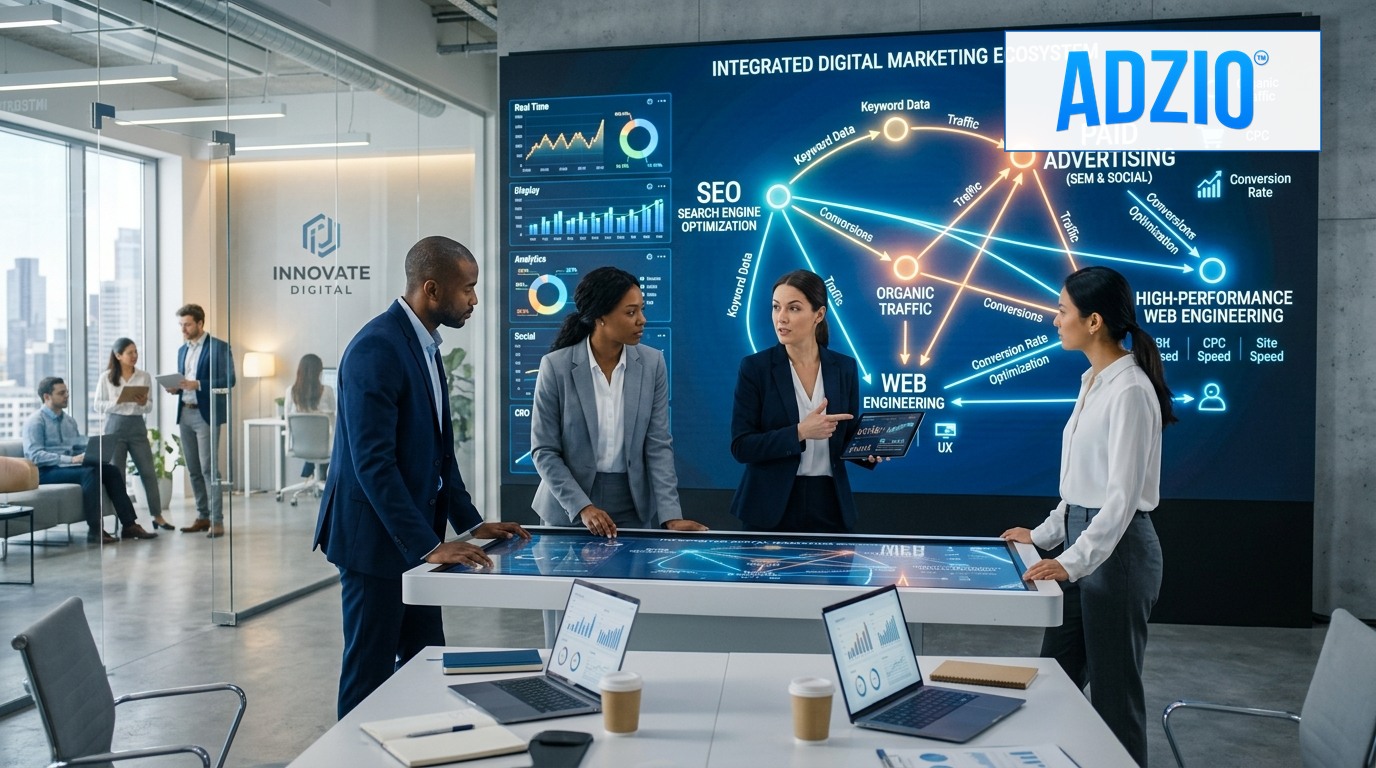
We build disciplined instruction sets that prevent bots from wasting server resources on administrative, staging, or duplicate utility pages:
Preventing link equity dissipation and ranking cannibalization through strict URL consolidation protocols:
<link rel="canonical" href="https://adzioindia.com/technical_seo.php" />
Google evaluates real-world user page experience through its Core Web Vitals benchmarks. Meeting these standards is essential for ranking eligibility and conversion performance:
Target: < 2.5s. Measures perceived load speed by timing when the main visual hero block completes rendering. Optimized via image compression, CDN caching, and preloading critical assets.
Target: < 200ms. Replaced FID to evaluate responsiveness across all user clicks and taps. Optimized by breaking long JavaScript tasks, code-splitting, and reducing DOM size.
Target: < 0.1. Measures visual stability. Solved by specifying explicit image/video aspect-ratio attributes, reserving banner ad space, and using font-display: swap.
Target: < 800ms. Server response speed optimized through HTTP/2 or HTTP/3 protocols, opcode caching, database query optimization, and fast local DNS hosting.
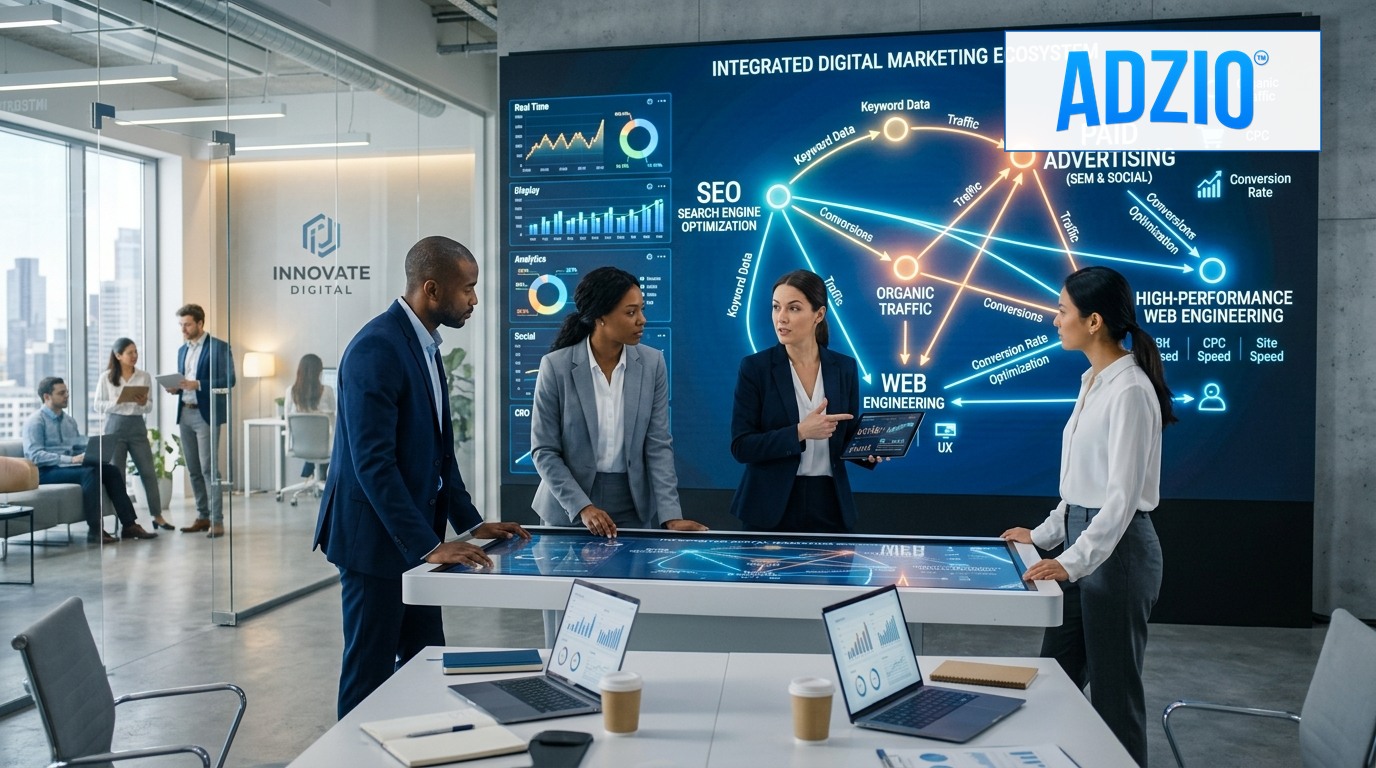
Transforming raw web code into structured entity knowledge graphs and ensuring complex client-side scripts render flawlessly for Googlebot.
Search engines use Schema.org vocabulary to understand the relationships between entities on your domain. Structured data unlocks high-CTR rich snippets in SERPs:
Organization, Service, LocalBusiness, and WebPage schemas into a unified semantic graph.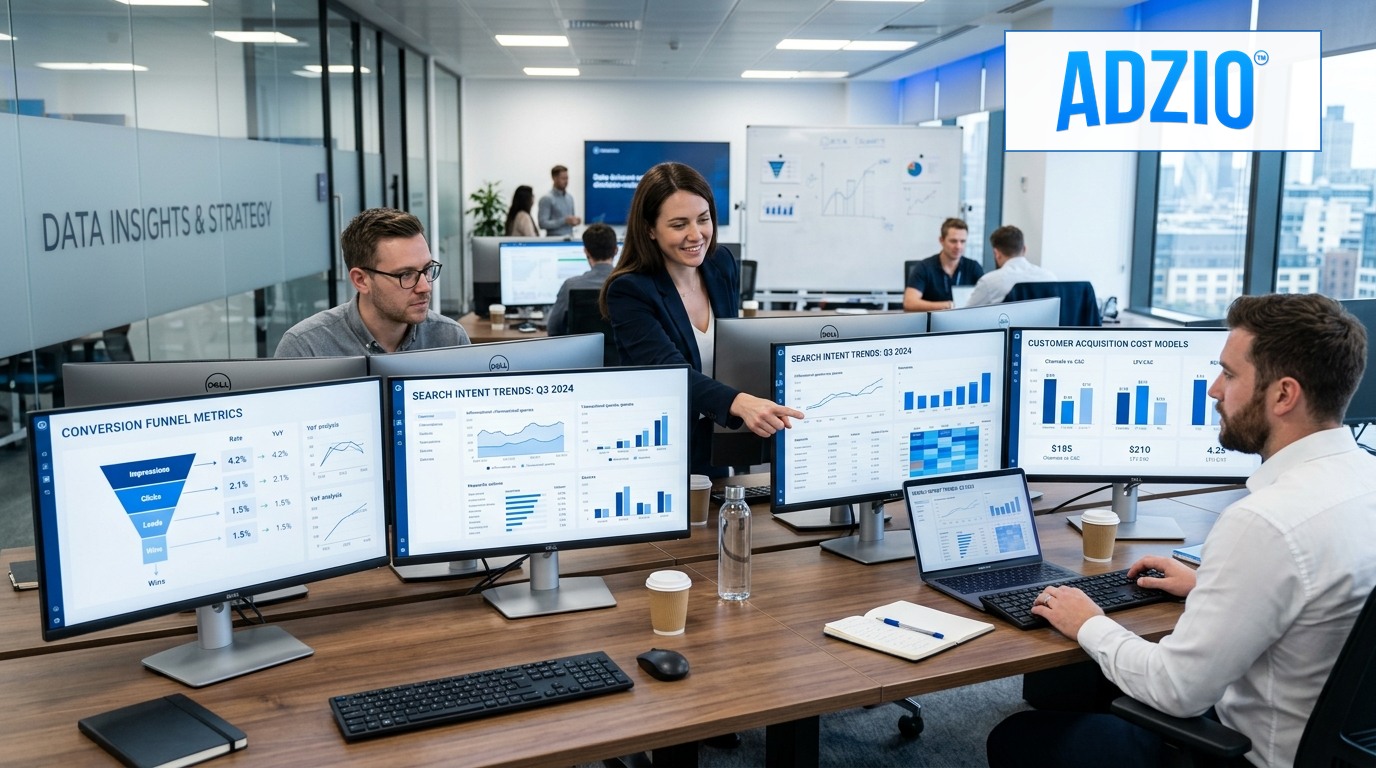
Modern web applications built on React, Angular, Vue, or Next.js rely on JavaScript to render content. Googlebot executes JavaScript through a headless Chromium Web Rendering Service (WRS), but delayed execution frequently causes indexation gaps:
<a href="..."> anchors instead of JavaScript click events (onClick) that bots cannot follow.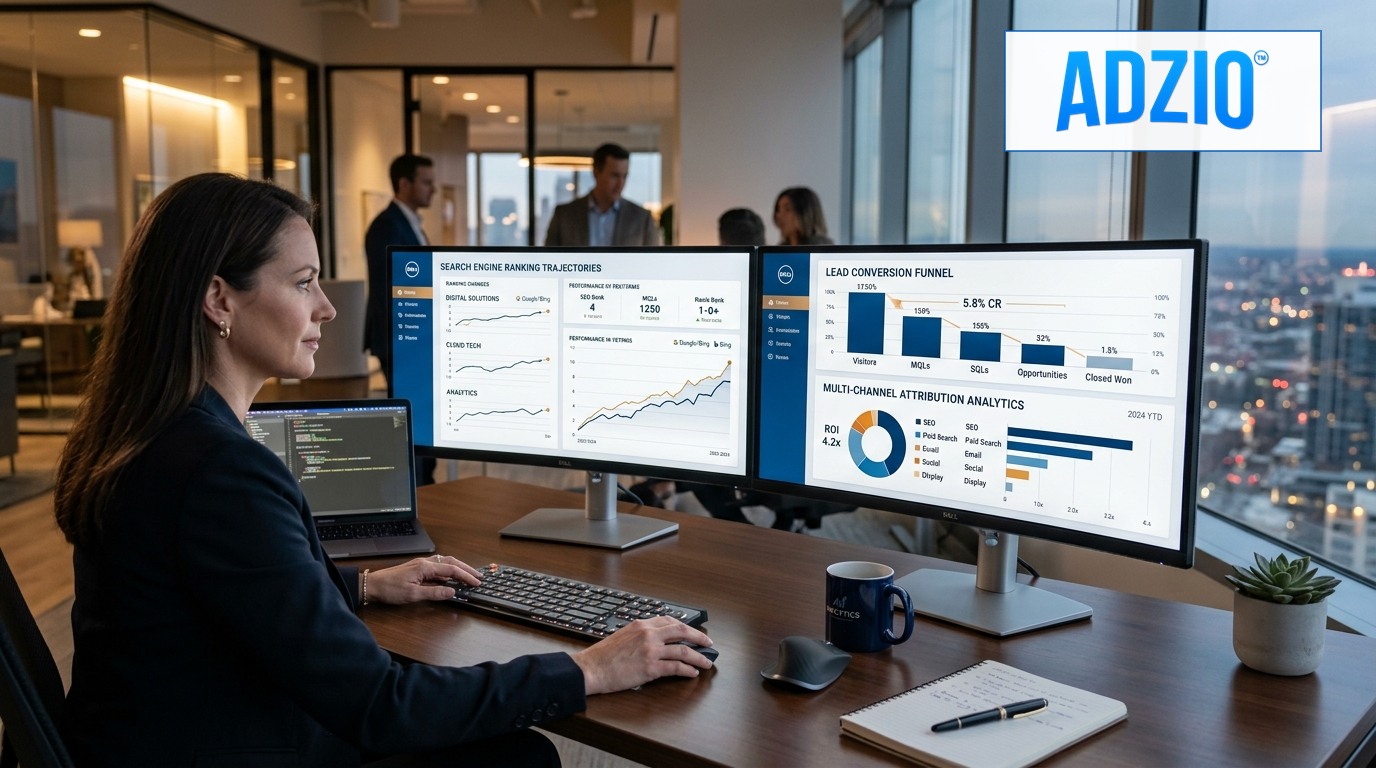
Online retail stores and large enterprise platforms face distinct technical hurdles: tens of thousands of dynamic product URLs, complex faceted filtering combinations, pagination, and fast-moving inventory.
AdZio implements robust enterprise technical governance to keep large domains streamlined and indexed:
noindex rules, or AJAX parameter controls to prevent millions of duplicate filter URL combinations from flooding the index.unavailable_after directives without losing accumulated page equity.
For businesses expanding across regional languages or international borders, proper technical targeting prevents geo-cannibalization and ensures searchers receive the correct regional version.
We configure clean multilingual architectures that signal regional relevance:
Media assets account for over 60% of modern web page weight. We systematically optimize your visual asset delivery:
Automated conversion to modern WebP and AVIF formats, reducing image payload by up to 75% without visual degradation.
Mandatory width and height attributes on all images and containers to eliminate Cumulative Layout Shift (CLS).
Deferring offscreen images with loading="lazy" while preloading the primary above-the-fold hero image for optimal LCP.
Distributing media files across edge server locations to minimize TTFB for users across India and globally.
Technical SEO is not a one-off checklist; it is an ongoing engineering discipline integrated into your development lifecycle.
We crawl the entire domain with enterprise scanners, analyze server access logs, inspect HTTP status codes, and audit Google Search Console index coverage.
We categorize findings by commercial impact and implementation complexity (Critical, High, Medium, Low), creating actionable sprint tickets for your engineering team.
Our technical SEO specialists work directly with your in-house engineers or execute code-level fixes directly, providing precise code snippets and testing environments.
We validate all changes on staging environments prior to live deployment, preventing crawl regressions, broken redirects, or accidental indexing blocks.
Following release, we recrawl modified URLs, submit updated sitemaps to Search Console, and verify that status codes and canonical tags behave exactly as designed.
Automated 24/7 monitoring systems track server uptime, SSL expiration, robots.txt integrity, Core Web Vitals health, and sudden indexation anomalies.
Learn more about our agency workflows in Our Process Hub →
Technical health requires continuous vigilance. A single inadvertent CMS update or server configuration error can silently block your entire organic funnel.
AdZio provides 24/7 visibility into your backend search health:
Instant notifications if robots.txt files are modified, noindex tags appear on critical pages, or server 5xx errors spike.
Daily monitoring of Google Search Console Page Indexing reports to resolve "Discovered - currently not indexed" backlogs.
Tracking 28-day rolling field data (CrUX) for LCP, INP, and CLS across desktop and mobile devices.
Monthly reviews showing Googlebot crawl frequency trends, wasted crawl budget percentages, and newly discovered URLs.
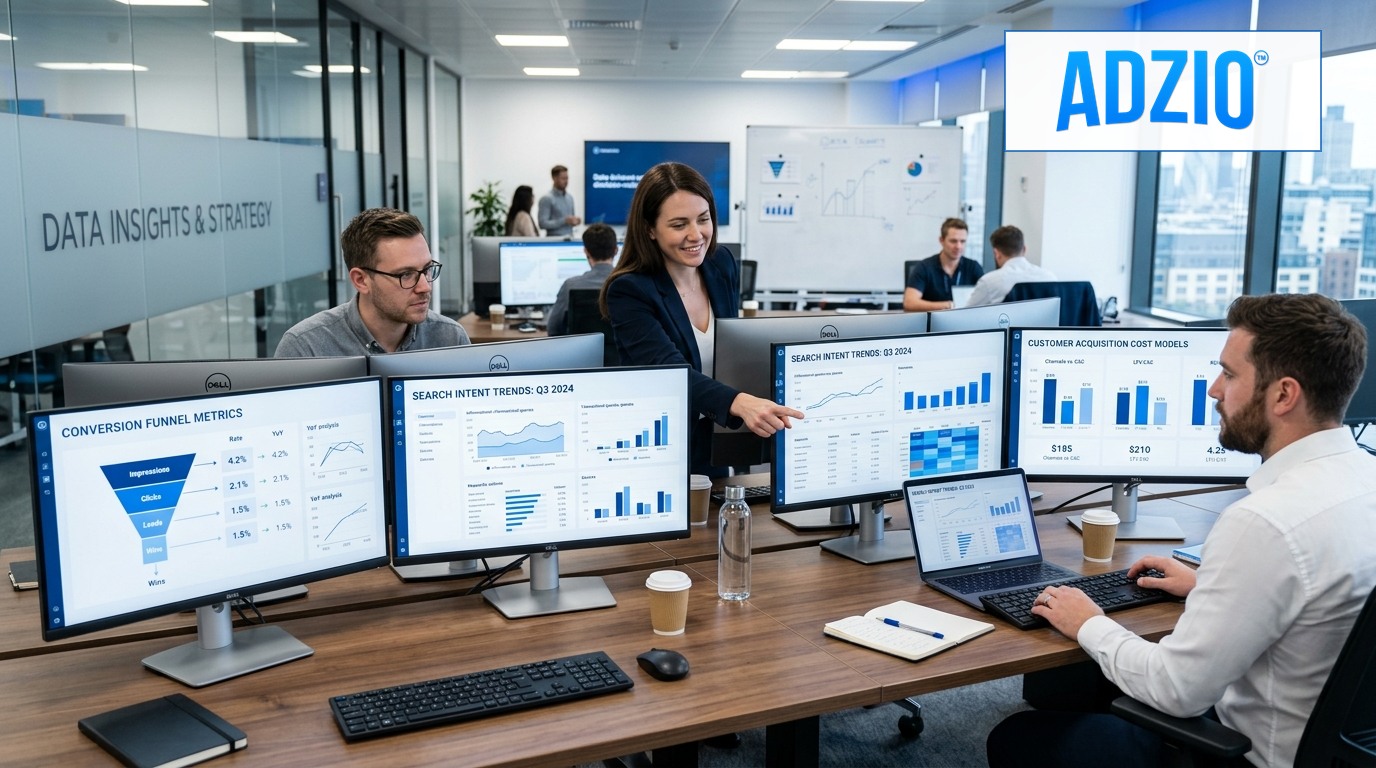
These silent technical issues frequently cost businesses thousands of lost organic visitors without triggering visible website crashes.
Migrating a site from development to production while leaving a <meta name="robots" content="noindex"> tag in the header causes instant de-indexing across Google.
A single misplaced slash in Disallow: / stops Googlebot from crawling your entire website, wiping out search visibility within days.
Multiple sequential 301 redirects drain crawl budget and cause search engines to abandon URL crawling after 4 to 5 hops.
Failing to implement canonical tags causes URL parameters, tracking UTMs, and print pages to compete against your primary landing pages.
Critical text or internal links injected via complex scripts without SSR may never be executed or indexed by search engine crawlers.
Uploading 5MB raw images directly from cameras triggers disastrous LCP scores and immediate user bounce rates on mobile networks.
Clear answers to help you understand technical site health, developer coordination, and realistic expectations.
noindex tags, resolving 500 server errors, or fixing broken canonicals) can restore dropped rankings within days to a few weeks as search engines re-crawl the domain. Broader performance optimizations, such as Core Web Vitals improvements, require 28 days of rolling real-user Chrome field data (CrUX) to reflect in Google's ranking algorithms.
Partner with an engineering-first SEO agency committed to forensic technical audits, clean code architecture, and sustainable organic search performance.